Butternut, acorn and spaghetti squash are all winter squash, but they are not interchangeable in every recipe. They differ in shape, flavor and texture, especially once cooked.
Here is how to tell them apart and choose the right squash for the meal you want to make.
Butternut Squash
What Does It Look Like?
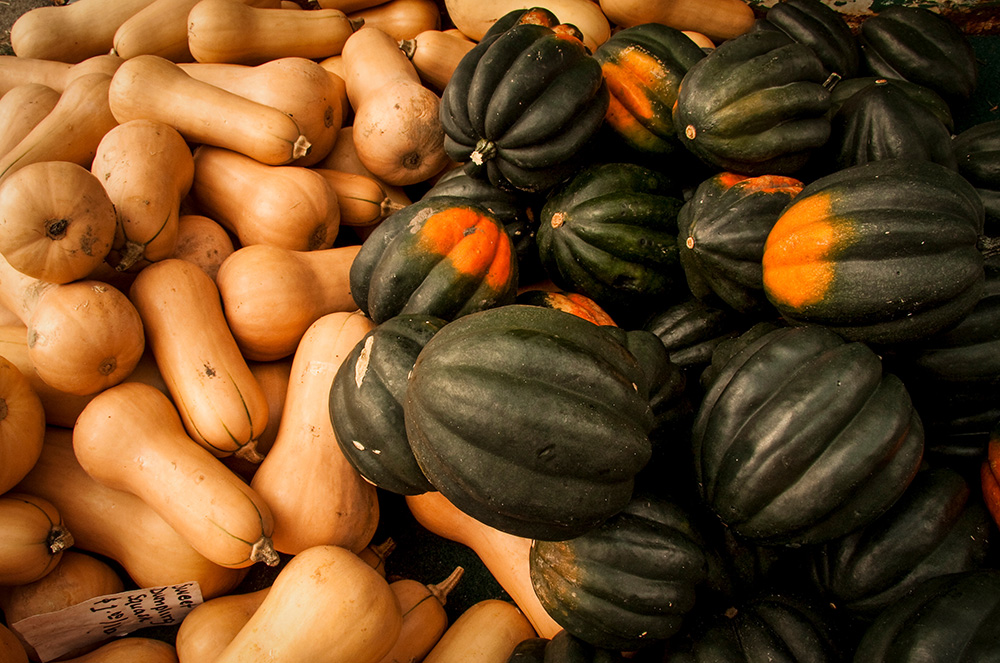
Butternut squash has smooth, tan skin with a long neck and rounded base. Inside, the flesh is deep orange, with the seeds concentrated in the wider bottom section.
The solid neck makes butternut squash especially convenient when you need plenty of evenly sized cubes.
What Does It Taste Like?
Butternut squash has a sweet, slightly nutty flavor. Roasting brings out more of its natural sweetness and gives the edges a deeper flavor.
What Is the Texture?
Once cooked, the flesh becomes smooth, dense and creamy. It can hold its shape in roasted cubes or be blended into a silky puree.
How Should You Use It?
Butternut squash works well in:
- Soups and purees
- Roasted vegetable dishes
- Pasta sauces
- Risotto
- Mashed squash
- Curries and stews
Choose butternut when you want a creamy texture or a squash that can be cut into uniform pieces.
Acorn Squash
What Does It Look Like?
Acorn squash is smaller and rounder, with deep ridges and a pointed bottom. The skin is usually dark green, although some varieties may include orange, yellow or cream coloring.
Its natural shape creates a bowl when the squash is cut in half.
What Does It Taste Like?
Acorn squash has a mild, slightly nutty flavor. It is generally less sweet than butternut squash, which makes it easy to pair with either savory or sweet ingredients.
What Is the Texture?
The cooked flesh is tender and soft but usually not as smooth or dense as butternut squash.
How Should You Use It?
Acorn squash is a good choice for:
- Stuffed squash
- Roasted halves
- Individual side dishes
- Soups
- Mashed squash
- Grain and vegetable fillings
Choose acorn squash when you want an individual portion or a squash that can hold a filling.
Spaghetti Squash
What Does It Look Like?
Spaghetti squash is oval with a smooth, firm rind. Its color ranges from pale cream to bright yellow.
The inside looks solid when raw, but it changes significantly after cooking.
What Does It Taste Like?
Spaghetti squash has a mild, neutral flavor. It is less sweet than butternut or acorn squash, allowing sauces and seasonings to take the lead.
What Is the Texture?
Once cooked, the flesh separates into thin strands when scraped with a fork. The texture is tender with a slight bite rather than smooth or creamy.
How Should You Use It?
Spaghetti squash can be served with:
- Tomato sauce
- Pesto
- Garlic and herbs
- Roasted vegetables
- Meat or vegetable sauces
- Casseroles
Choose spaghetti squash when you want separate strands instead of cubes or a puree.
Squash Comparison at a Glance
| Squash | Appearance | Flavor | Cooked texture | Best uses |
|---|---|---|---|---|
| Butternut | Tan with a long neck and round base | Sweet and nutty | Smooth and creamy | Soup, roasting, purees and sauces |
| Acorn | Small, round and deeply ridged | Mild and slightly nutty | Tender and soft | Stuffing, roasting and side dishes |
| Spaghetti | Oval with a cream or yellow rind | Mild and neutral | Tender strands | Sauces, casseroles and vegetable bowls |
How to Choose Winter Squash
Whichever variety you choose, look for squash that:
- Feels firm and heavy for its size
- Has a hard, intact rind
- Has no soft spots or deep cuts
- Has a dry, sturdy stem when one is attached
Winter squash can be difficult to cut, so use a stable cutting board and a sharp, heavy knife. Smaller acorn and spaghetti squash can also be pierced and cooked whole before being opened.
Which Squash Should You Pick?
Choose butternut squash for creamy soups, purees or roasted cubes.
Choose acorn squash when you want to roast individual halves or add a filling.
Choose spaghetti squash when you want tender strands that can carry your favorite sauce.
Once you know what makes each variety different, choosing the right squash becomes much easier.
Visit your nearest Joe Randazzo’s to explore the seasonal squash selection.
Button: Find a Location